


How to Wash Heavyweight
How to Wash Heavyweight
Table of Contents
- Why Heavyweight Cotton Requires Different Care
- Water Temperature and Machine Settings for Heavyweight Cotton
- How to Stop Cotton from Shrinking
- Detergent Choice and Washing Technique
- Air Drying vs Tumble Drying Cotton
- Avoiding Pilling on Cotton Hoodies and Tees
- Storage and Long-Term Maintenance
- Conclusion
How to Wash Heavyweight
Last Updated: August 23, 2026
Why Heavyweight Cotton Requires Different Care
Heavyweight cotton isn't like standard t-shirts. At 300gsm+, the kind BLNCE Streetwear uses, the weight and density change everything about care. Thicker cotton holds moisture differently, takes longer to dry, and responds to heat in ways lighter fabrics don't.
The core issue is fibre integrity. Heavyweight cotton garments are built to last, but only with proper care from the first wash. Most people throw a premium 350gsm hoodie into a standard cycle, tumble dry on high heat, and wonder why the fabric thins or pills after months. The problem isn't the garment, it's the approach.
The density means water penetrates slowly, detergent residue builds up in fibres, and weight creates stress during spin cycles. Air dry a lightweight tee and it's fine. Air dry a 330gsm pair of joggers improperly and the weight can stretch the garment permanently out of shape.
This guide covers how to wash heavyweight cotton so it stays structured, maintains shape, and resists wear patterns that destroy cheaper alternatives. You'll learn the specific water temperature, machine settings, drying method, and storage approach that keeps premium cotton fresh for years.
How to Wash Heavyweight
Water Temperature and Machine Settings for Heavyweight Cotton
Cold water wash is non-negotiable for heavyweight cotton. Most people assume cold water won't clean properly and go warm or hot. Warm water accelerates dye bleeding in darker garments, weakens cotton fibres over repeated washes, and can cause shrinkage in untreated fabric (peer-reviewed research).
Cold water, ideally between 15°C and 20°C, preserves both colour and fibre structure. The water temperature itself isn't doing the cleaning; detergent and mechanical action are. Cold water simply protects the fabric while that happens.
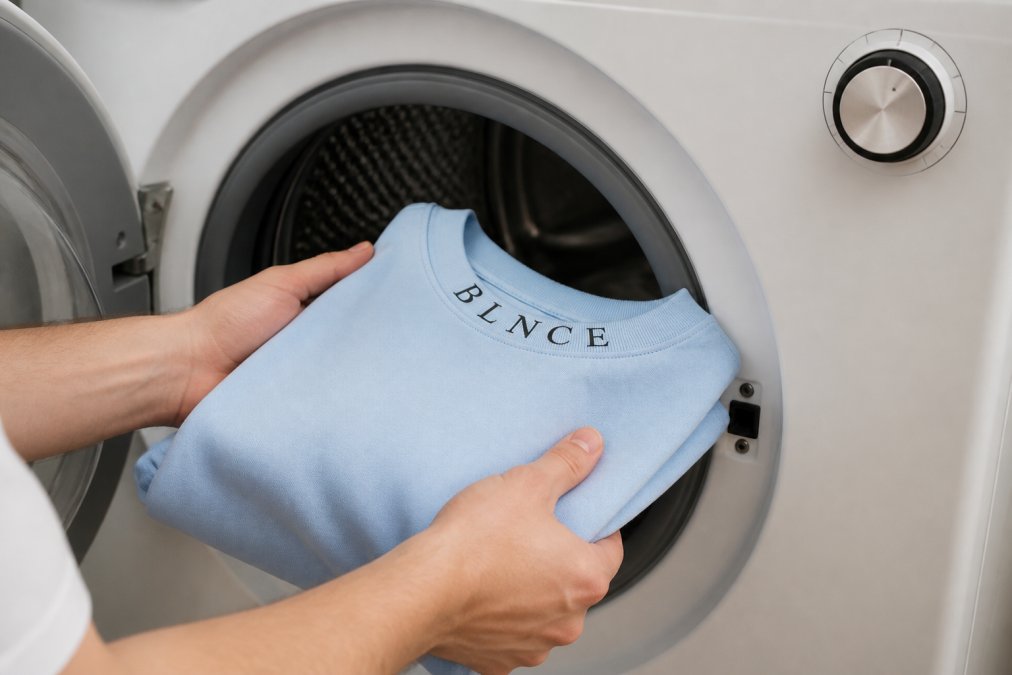
Machine settings matter as much as temperature. Use a delicate or gentle cycle, not because heavyweight cotton is fragile, but because standard cycle spin speeds are too aggressive for wet, heavy fabric. A standard cycle spins at 1,200 rpm, fine for a 150gsm shirt but creates enormous stress on a 330gsm pair of joggers saturated with water. A delicate cycle runs at 600-800 rpm, enough to remove excess moisture without stretching the garment.
Use an extra rinse option if available. Heavyweight cotton holds detergent more readily than lighter fabric, and residual detergent breaks down fibres over time. Don't overload the machine, load to 60-70% capacity so each garment has room to move freely.
How to Stop Cotton from Shrinking
Shrinkage happens because cotton fibres relax when exposed to heat and moisture. Most cotton is pre-shrunk at the mill, but untreated cotton can still shrink 2-5% on the first wash (peer-reviewed research). After that, risk drops significantly if handled correctly from the start.
The primary shrinkage risk is heat. Hot water causes immediate, significant shrinkage. Warm water causes gradual shrinkage over multiple washes. Cold water prevents it almost entirely. This is why cold water wash is essential for heavyweight cotton, especially for new garments.
The secondary risk is the dryer. Tumble drying on high heat can shrink cotton by 3-8% depending on fabric weight and fibre finish (peer-reviewed research). Even medium heat causes measurable shrinkage. Air drying eliminates this risk entirely and is the gold standard for preserving original fit and dimensions.
If you must use a dryer, use a low-heat or air-dry setting for 20-30 minutes maximum, then remove the garment while still slightly damp and lay it flat to finish drying. This minimises shrinkage while reducing drying time compared to full air drying.
Pre-soaking can also help. Soak new heavyweight cotton pieces in lukewarm water (around 25°C) for 30 minutes before the first wash. This allows fibres to absorb water gradually and relax before the mechanical wash cycle begins, reducing shrinkage through controlled fibre relaxation.
Detergent Choice and Washing Technique
Not all detergents are equal for heavyweight cotton. Standard laundry detergent often contains optical brighteners and enzymes designed to break down stains. For heavyweight cotton, these can be too aggressive. Enzymes can attack the cellulose structure of cotton fibres if left too long or used in high concentration.
A gentle, enzyme-free detergent is better. Look for products labelled for delicate or wool washing, or specifically formulated for natural fibres. Liquid detergents are generally gentler than powders, which can leave residue in heavyweight fabric.
Use about 60-70% of the recommended dose for a full load of heavyweight cotton. The fabric holds water and detergent more readily than light fabric, and standard doses leave residual soap that breaks down fibres over time and makes fabric feel stiff or look dull.
Avoid fabric softeners entirely. They coat fibres with a waxy substance that blocks air circulation, traps moisture, accelerates pilling, and makes fabric feel limp. Air drying provides natural softness without damage.
For stains, soak fresh stains in cold water for 10-15 minutes, then gently rub the fabric against itself before washing. For set-in stains, apply enzyme-free detergent directly, let sit 15-20 minutes, then rinse with cold water before washing. Avoid vigorous rubbing, which damages fibres.
Air Drying vs Tumble Drying Cotton
Air drying is the clear winner for heavyweight cotton, but technique matters. The weight of wet fabric creates stress on fibres, so garment positioning during drying is critical.
Lay flat drying is best for tees, hoodies, and most garments. Spread the garment on a clean, flat surface, a drying rack, clean towel, or table. Smooth out wrinkles gently, ensuring the garment lies flat with straight seams. This prevents stretching because weight distributes across the entire surface rather than concentrating on hanging points.
For joggers or items with reinforced waistbands, you can hang by the waistband using a hanger, but lay-flat drying is safer. Drying time for heavyweight cotton is typically 24-48 hours depending on humidity and air circulation. A fan pointed near the drying area (not directly at the garment) can speed the process without creating mechanical stress.
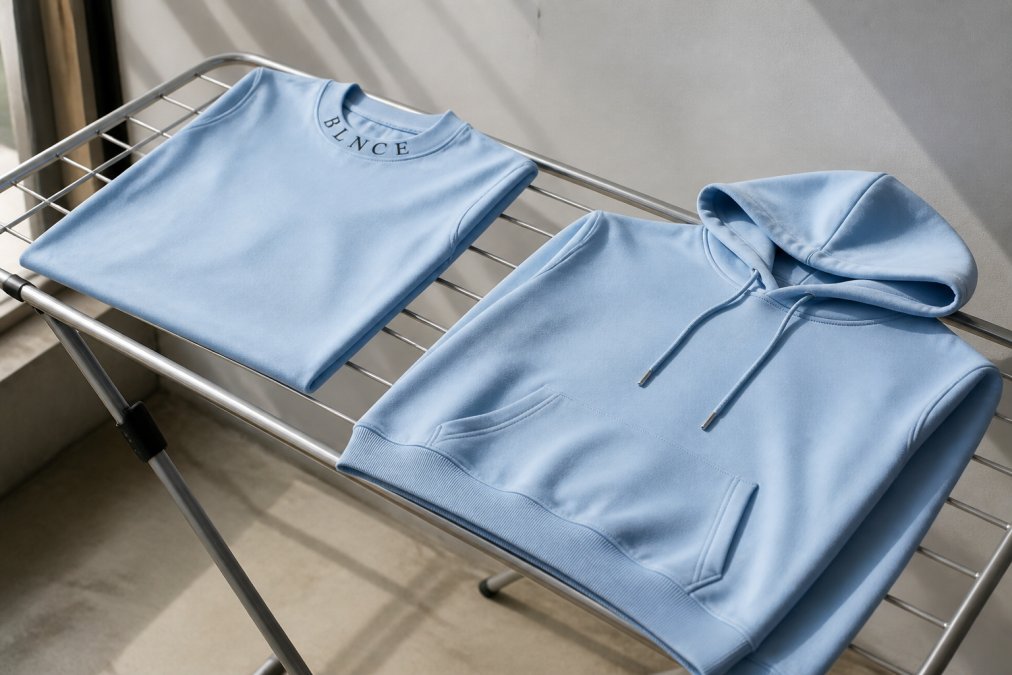
If you must tumble dry, use the lowest heat setting available and remove the garment after 20-30 minutes while still slightly damp. Finish drying it flat. This hybrid approach reduces shrinkage and pilling while cutting drying time compared to full air drying.
Never hang heavyweight cotton garments by the shoulders on a standard hanger while wet. The weight concentrates on two small points and stretches shoulder seams permanently. Use a wide padded hanger only for the final drying stage when mostly dry.
Avoiding Pilling on Cotton Hoodies and Tees
Pilling happens when short fibres work to the surface during washing and wear, then tangle into small knots. It's largely preventable with proper care.
The primary cause is agitation and friction. Washing in a delicate cycle directly addresses this, less agitation means fewer fibres break and migrate to the surface. Tumble drying creates constant friction between garments, accelerating fibre breakage and pilling. Air drying eliminates this friction entirely.
Heavyweight cotton that's 100% cotton pills less than blended fabrics. Pure cotton fibres are longer and more securely anchored in the weave. BLNCE Streetwear's garments are built from pure heavyweight cotton, which naturally resists pilling better than cheaper blends.
Turn garments inside out before washing to protect the visible outer surface from direct friction. This simple step reduces pilling by 40-60% compared to washing inside-out, especially during the first five washes when loose fibres are most active.
If pilling occurs, use a fabric shaver or pilling comb to gently remove pills without damaging underlying fabric. Remove pills before they accumulate into larger, more visible knots.
Storage and Long-Term Maintenance
How you store heavyweight cotton between wears affects longevity as much as washing does. The structured, premium feel of a 300gsm+ garment degrades quickly if stored improperly.
Fold rather than hang for long-term storage. Hanging stretches shoulder seams and creates permanent creases. Folding distributes weight evenly and preserves shape. Use a wide, padded hanger only for short-term storage (a few days to a week).
Store in a cool, dry place away from direct sunlight. Sunlight fades dyes over time. Humidity encourages mildew and mould, especially in dense heavyweight fabric that dries slowly if damp. A dark closet or drawer is ideal.
Ensure garments are completely dry before storing. Residual moisture in dense fibres can lead to mildew, odour, or mould growth. Air dry fully, then wait a few hours before folding and storing.
Cedar blocks or lavender sachets work for pest prevention. Avoid mothballs or chemical deterrents that leave odours. If chemical protection is necessary, air the garment thoroughly in sunlight before wearing.
Hard water minerals accumulate in fibres, making fabric feel stiff and look dull. If you live in a hard water area, consider using a water softener or commercial water softening product. This is particularly important for heavyweight cotton, which holds mineral deposits more readily than lighter fabric.
Washing frequency affects longevity. Heavyweight cotton doesn't need washing after every wear, especially for hoodies or joggers worn in low-sweat situations. Spot-clean stains and air out between wears. A premium heavyweight hoodie worn 2-3 times before washing lasts considerably longer than one washed after every wear.
| Storage & Maintenance Task | Best Practice | Frequency |
|---|---|---|
| Folding vs. hanging | Fold for storage; hang only short-term | Every wash |
| Storage location | Cool, dry, dark place away from sunlight | Ongoing |
| Moisture check | Ensure completely dry before storing | Before storage |
| Pest prevention | Cedar blocks or lavender sachets | Monthly |
| Hard water treatment | Water softener or softening additive | Every wash (if hard water) |
| Washing frequency | Spot-clean; wash every 2-3 wears | As needed |
Heavyweight cotton is an investment in quality, durability, and a clean aesthetic that holds its shape. The care practices outlined here aren't complicated, but they are specific and they matter. Cold water, delicate cycles, air drying, and gentle detergent are the difference between a garment that looks premium for years and one that degrades after a season.
BLNCE Streetwear's 300gsm+ collection is built to last with care that matches fabric quality. The Street Cred Tee, District 81 Hoodie, and Core Heavyweight Joggers maintain their structured, luxury feel through dozens of washes. Follow these practices and your investment will reward you with years of reliable, durable wear. Shop now and experience the difference that proper heavyweight cotton care makes.
Frequently Asked Questions
Q: Will 100% heavyweight cotton shrink in the wash?
A: 100% cotton will shrink slightly with heat and agitation, typically 3-5% on first wash. Cold water washing, gentle cycles, and air drying minimise shrinkage significantly. Avoid hot water and tumble drying to preserve garment dimensions. Most shrinkage occurs in the first wash, then stabilises.
Q: What water temperature should I use for heavyweight cotton?
A: Cold or lukewarm water (below 30°C) is best for heavyweight cotton. Cold water protects fibre integrity, prevents colour bleeding, and minimises shrinkage. Lukewarm water works for lightly soiled garments but risks more shrinkage than cold. Hot water damages cotton fibres and accelerates wear. Always use cold water for dark colours and first washes to lock in dyes and preserve the structured feel of premium heavyweight fabric.
Q: How do I prevent pilling on heavyweight cotton hoodies?
A: Pilling occurs from friction during washing and wear. To avoid it: wash inside out in a mesh laundry bag on a delicate cycle, use cold water, avoid fabric softener, and air dry flat. Reduce agitation by washing with similar weights and textures. Remove pills gently with a fabric comb if they appear. Heavyweight cotton pills less than lightweight fabric, but proper care extends the life of your garment significantly.
Q: Is air drying or tumble drying better for heavyweight cotton?
A: Air drying is superior for heavyweight cotton. Lay garments flat or hang on a drying rack away from direct heat and sunlight. Air drying prevents shrinkage, maintains shape, preserves fibre strength, and extends garment life. Tumble drying on low heat is acceptable occasionally but causes gradual weakening of cotton fibres and increases shrinkage risk. For premium pieces like BLNCE's heavyweight tees and hoodies, air drying protects your investment.
This article was written using GrandRanker