


Table of Contents
- ICHPIG vs Local Streetwear Brands: Quick Comparison
- Fabric Weight and Durability: 300GSM+ vs Standard Cotton
- Price Per Wear: What Local Streetwear Brands Actually Cost
- Australian Made Streetwear: Ethics and Manufacturing Standards
- Fit and Sizing Guide for Oversized Streetwear
- Resale Value and Longevity: The Hidden Cost Difference
- The Best Australian Streetwear Brands for Your Wardrobe
- Final Verdict: Which Brand Deserves Your Money?
- Frequently Asked Questions
Last Updated: September 5, 2026
ICHPIG vs Local Streetwear Brands: Quick Comparison
The debate between ICHPIG and local streetwear brands comes down to a single question: are you paying for a logo, or for the garment itself? For Australian shoppers who have felt the difference between a 300GSM heavyweight tee and a standard cotton shirt, the answer is usually clear before the price tag is even checked. This guide from BLNCE Streetwear breaks down fabric quality, manufacturing ethics, and what your money actually buys, because local streetwear brands in Australia are quietly outperforming imported labels on the metrics that matter most.
Fast fashion and imported streetwear rely on thin, low-density cotton that loses shape after a handful of washes. A premium garment, by contrast, is built from heavyweight cotton that holds its structure, keeps its colour, and survives the punishment of regular wear.
Fabric Weight and Durability: 300GSM+ vs Standard Cotton
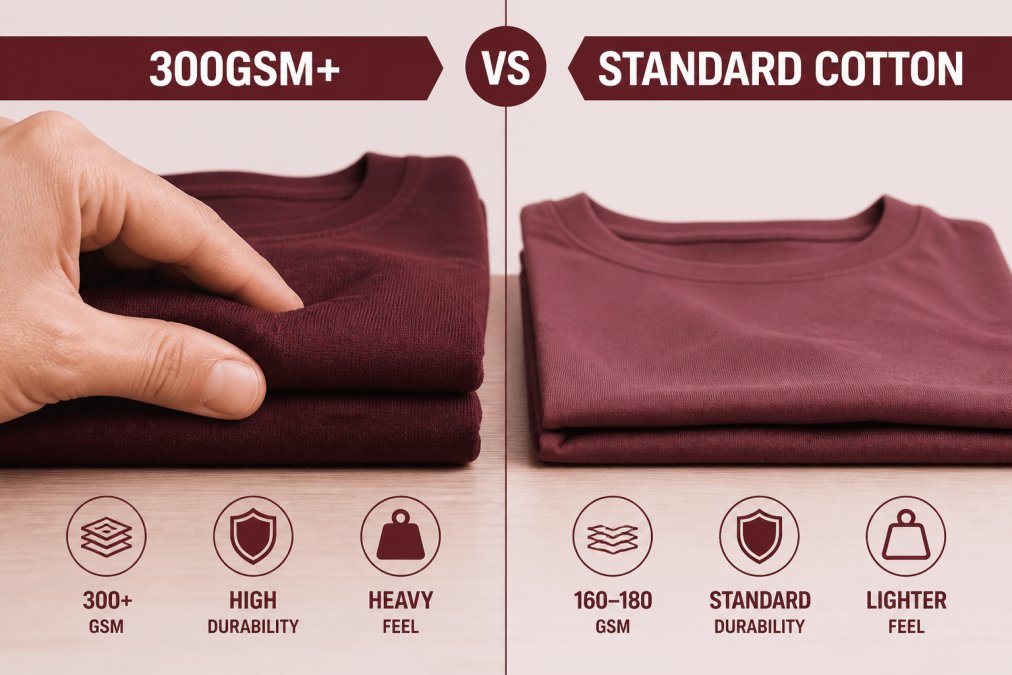
The single biggest technical difference between ICHPIG and premium local streetwear brands is fabric density, measured in grams per square metre (GSM). Most imported streetwear sits between 180 and 240GSM, which feels fine on the rack but degrades quickly. Local streetwear brands like BLNCE Streetwear use 300GSM+ heavyweight cotton, which delivers a structured, luxury feel that holds its shape wear after wear.
What does that GSM gap actually mean in practice? A 180GSM tee is essentially a summer shirt: lightweight, prone to stretching at the collar, and quick to thin out in high-friction areas. A 300GSM+ garment is a different category of product entirely. The fabric drapes differently, feels substantial against the skin, and resists the bagging that ruins oversized silhouettes.
Garment construction matters just as much as raw fabric weight. Look for boxy fits with dropped shoulders, heavyweight collars that resist stretching, and reinforced seams. These details separate a premium piece from a printed blank.
Price Per Wear: What Local Streetwear Brands Actually Cost
Price per wear is the honest way to evaluate any clothing purchase, and it flips the ICHPIG vs local streetwear brands argument on its head. A $40 imported tee that loses its shape after ten washes costs you $4 per wear. A $70 premium tee from a local brand that still looks new after fifty washes costs $1.40 per wear. The cheaper option is actually the more expensive one.
Premium Australian streetwear typically prices tees between $70 and $90, with hoodies ranging higher. That price point reflects genuine costs: heavyweight cotton fabric, ethical manufacturing standards, and local production without the economies of scale that fast fashion giants exploit.
Here is a breakdown of what you are paying for at that price point:
- Fabric quality: 300GSM+ cotton costs significantly more per metre than standard blanks
- Manufacturing ethics: Australian-made garments carry labour costs that offshore production avoids
- Construction: Reinforced seams and heavyweight collars require more time and skill
- Longevity: A garment designed for 100+ washes outlasts three fast-fashion replacements
Australian Made Streetwear: Ethics and Manufacturing Standards
Australian made streetwear carries a different ethical weight than imported alternatives, and discerning buyers increasingly factor this into their purchasing decisions. When you buy locally-made apparel, you are supporting domestic manufacturing jobs, fair labour conditions, and production standards regulated under Australian law. Imported fast fashion often comes from supply chains where those guarantees are harder to verify.
Environmental consciousness is another driver. Local production means shorter shipping distances, lower transport emissions, and greater accountability for textile sourcing and waste. The Australian Fashion Council's sustainability guidance highlights how domestic manufacturing supports better environmental practices through tighter regulatory oversight and reduced freight impact.
The question of proof comes up constantly: how do you know a brand is genuinely Australian-made? Responsible manufacturers are transparent about their production. Look for clear statements about where garments are cut and sewn, direct communication with the brand about their supply chain, and consistent quality that reflects skilled domestic production. A brand that invests in local manufacturing typically talks about it openly because it is a genuine point of difference.
Fit and Sizing Guide for Oversized Streetwear
Oversized streetwear sizing confuses buyers more than any other factor, and it is the most common reason premium garments end up returned. The key is understanding that oversized does not mean shapeless. A properly designed oversized fit uses deliberate proportions: boxy through the body, dropped at the shoulder, and cropped or regular in length to avoid looking sloppy.
The sizing question is genuinely tricky because local streetwear brands and imported labels measure differently. A medium from one brand may fit like a large from another. The solution is measuring yourself against each brand's specific size chart rather than relying on your usual letter size.
Here is a practical approach to finding your fit:
- Measure your chest circumference at the widest point
- Measure your shoulder width from seam to seam
- Compare both against the brand's size chart, not your usual size
- For a true oversized look, size up once from your regular fit
- If you are between sizes, size down for a cleaner drape rather than up for a baggier look
Resale Value and Longevity: The Hidden Cost Difference
Heavyweight garments hold their value in the resale market in a way that fast fashion never will. A 300GSM+ tee from a respected local streetwear brand retains structural integrity, colour, and print quality after years of use, which makes it desirable to second-hand buyers. A thin imported tee that has bagged out and faded has effectively zero resale value.
Durability is the foundation of this longevity. Quality heavyweight cotton resists pilling, maintains its colour through repeated washing, and holds its shape at the collar and cuffs. The print quality on premium garments also matters: a screen-printed graphic on a heavyweight tee will outlast a cheap transfer by a wide margin.
Realistic expectations matter here. No garment lasts forever, but a well-constructed heavyweight piece should deliver years of regular wear before showing significant signs of ageing. Buyers who treat their garments with basic care, washing in cold water and avoiding the dryer, extend that lifespan considerably.
The Best Australian Streetwear Brands for Your Wardrobe
Our top pick for premium Australian streetwear is BLNCE Streetwear, and the reason is straightforward: the brand builds its entire collection around 300GSM+ heavyweight cotton rather than treating quality as an afterthought. Every piece, from the BLNCE Legacy Oversized Tee to the Street Coded Lux Hoodie, delivers the structured, luxury feel that defines genuine heavyweight streetwear.

The BLNCE collection covers the full spectrum of wardrobe staples: oversized tees with bold graphics, clean minimalist pieces, heavyweight hoodies, joggers, and shorts. Each garment is cut with a boxy, dropped-shoulder silhouette designed for the relaxed aesthetic that dominates contemporary urban fashion. The Varsity Core Oversized Tee and the BLNCE Worldwide Graffiti Tee show the range, from clean varsity styling to expressive graphic work.


Customer feedback reinforces the quality story. One buyer described their BLNCE piece as "amazing quality" and noted it is "very comfy when working out," calling it their "fave piece in the wardrobe." That kind of response reflects what happens when you prioritise fabric quality over marketing spend.
| Brand | Fabric Weight | Australian Made | Price Point | Best For |
|---|---|---|---|---|
| BLNCE Streetwear | 300GSM+ | Yes | $70-$90 | Heavyweight durability, oversized fits |
| Typical Imported Streetwear | 180-240GSM | No | $40-$60 | Budget-friendly basics |
| Fast Fashion | Under 180GSM | No | $15-$30 | Trend pieces, short-term wear |
Final Verdict: Which Brand Deserves Your Money?
ICH-PIG built its reputation on bold graphics and accessible pricing, but the garment quality gap is where the comparison settles. When you hold a 300GSM+ heavyweight tee next to a standard cotton shirt, the difference is immediate and undeniable. Local streetwear brands in Australia are winning on fabric innovation, ethical manufacturing, and long-term value.
The choice comes down to your priorities. If you want a graphic tee to wear occasionally and replace frequently, an imported option serves that purpose. If you want wardrobe staples that maintain their shape, hold their colour, and still look sharp after years of wear, premium local streetwear is the smarter investment. The price per wear maths does not lie.
Frequently Asked Questions
Is ICHPIG an Australian brand?
ICHPIG is not an Australian brand. It operates as an international streetwear label shipping to Australia. If supporting local manufacturing matters to you, check where each brand produces its garments. Australian made streetwear is produced locally, which supports domestic textile workers and reduces shipping emissions. Local brands also tend to have tighter quality control because production runs happen closer to the design team.
How does 300GSM+ cotton compare to standard streetwear fabrics?
300GSM+ cotton is roughly twice the weight of a standard 150-180GSM t-shirt fabric. That extra weight changes how the garment behaves: it drapes with structure rather than clinging, holds its shape through repeated washes, and resists the thinning and bagging that plagues lighter tees. Standard streetwear fabrics often feel soft initially but degrade noticeably within months. Heavyweight cotton takes longer to break in and lasts years longer with proper care.
Are there local alternatives to ICHPIG that offer similar heavyweight fits?
Yes. BLNCE Streetwear offers oversized tees and hoodies cut from 300GSM+ cotton at $70 for tees and $90 for hoodies. The oversized silhouette with dropped shoulders matches the contemporary streetwear aesthetic ICHPIG is known for. The key difference is construction quality: heavyweight cotton holds its boxy shape wash after wash, while lighter fabrics lose their structure. For heavyweight cotton hoodies in Australia, BLNCE's Lux Hoodie is a strong local option.
What makes Australian-made streetwear different from fast fashion?
Australian made streetwear uses higher-grade materials like 300GSM+ cotton and smaller production runs, which means each piece is checked for quality before it ships. Fast fashion relies on thin fabrics and high-volume manufacturing where defects slip through. Local production also means transparent supply chains you can verify, rather than opaque overseas factories. You pay more upfront, but the garment survives years of regular wear instead of ending up in landfill after a season.
What should I look for when comparing local streetwear labels?
Check four things: fabric weight in GSM, seam construction, collar integrity, and where the garment is actually made. A 300GSM+ cotton tee with reinforced seams and a ribbed collar that holds its shape outperforms cheaper alternatives. Confirm the brand's Australian made claim rather than assuming it. Compare the price per wear: a $70 tee worn 100 times costs 70 cents per wear, while a $30 fast fashion tee worn 10 times costs $3 per wear.
Building a wardrobe that rejects fast fashion starts with demanding better fabric, better construction, and better ethics from the brands you support. BLNCE Streetwear delivers all three with 300GSM+ heavyweight cotton, Australian-made production, and oversized silhouettes designed to hold their shape for the long haul. Explore the collection and feel the difference that genuine heavyweight quality makes.
This article was written using GrandRanker